

Modernizing PowerCenter: The IDMC Way – Better, Faster, CheaperHeading

For many organizations, Informatica PowerCenter has been the workhorse of their data integration for years, even decades, reliably driving ETL processes and populating data warehouses that feed BI reports. However, this longevity often leads to a complex environment that can hinder agility and innovation.  

Think of it like planning a move from your home office. What started as a tidy, well-structured workspace gradually turns into a mess of old documents, outdated tech, and redundant systems. Planning a move – or in this case, a migration – becomes a challenge of its own.

This is exactly what many teams face when it’s time to modernize PowerCenter.

The Challenge: Decades of Accumulated Complexity

Over time, PowerCenter environments often evolve into tangled webs of legacy code, tribal knowledge, and unnecessary workflows. The result? Slower innovation, higher cost, and increased risk.

Common challenges we see:

  • Code Buildup: Redundant workflows, mappings, and transformations proliferate over time. It’s like having multiple copies of the same document, making it hard to know which is the latest version.  
  • Knowledge Gaps: Staff turnover results in a lack of understanding of the existing PowerCenter code and outdated source-target mapping documents. It’s like inheriting a complex machine without an instruction manual.  
  • Increased Risk and Cost: All of this complexity makes modernization projects lengthier, more expensive, and riskier.  

The Solution: Paradigm’s Accelerator – the Key to Faster and Cheaper IDMC Migrations

The Paradigm Accelerator is a powerful solution designed to solve these challenges head-on. It provides in-depth analysis of your PowerCenter environment, acting as a “code detective” and organizational tool.

How it works:

  • Identify Duplicates: Pinpoint redundant workflows, mappings, and other assets for removal.
  • Map Your Environment: See a clear picture of your PowerCenter landscape, regardless of its age or complexity.
  • Understand What You Have: Uncover deep insights into 180+ asset attributes, from transformations to SQL overrides and session details.
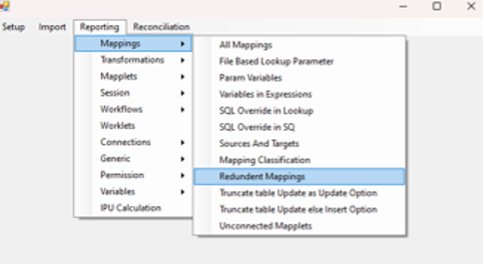
By doing this upfront analysis, you’re not just organizing your digital home, you’re setting the stage for a faster, safer, and smarter move to the cloud.

  • De-risk your migration by minimizing errors and rework for a smoother transition.  
  • Lower cloud costs (FinOps) by avoiding migrating and running unnecessary processes in IDMC.  
  • Accelerate modernization by reducing the time, cost, and effort of the project.  

The 5-Step Plan: Roadmap to PowerCenter Modernization

Modernizing isn’t just about moving code, it’s about transforming your environment for long-term value. Paradigm’s proven 5-step methodology guides you from strategy to execution:  

  1. Understand Your Organization: Determine your organizational structure and data ownership model.  
  2. Assess Your Environment: Inventory your PowerCenter assets. (The Accelerator automates this!)
  3. Define Migration Scope: Decide which assets to migrate and which to retire.  
  4. Leverage the Accelerator’s Capabilities: The Paradigm Accelerator works with PowerCenter CDI workbench and Informatica conversion tooling.  
  5. Plan for Thorough Testing: Use Cloud Data Validation automation to confirm accuracy and performance post-migration.

Paradigm’s Proven Success

Paradigm brings deep expertise to PowerCenter modernization projects. Our team is certified in IDMC and PowerCenter and includes members with experience from Informatica Professional Services.

When a major financial services provider with 80+ years of history partnered with Paradigm, the goal was clear: migrate from legacy PowerCenter to IDMC without disrupting operations.  

Results we delivered:

  • 400% increase in migration efficiency using the Accelerator
  • Eliminated on-prem infrastructure costs  
  • 8X performance improvement of reusable assets  
  • Thousands of mappings automatically converted  

Why the Cloud? The Benefits of IDMC

Modernizing to Informatica’s Intelligent Data Management Cloud (IDMC) using the Paradigm Accelerator unlocks serious advantages:

  • Agility and Scalability: Adapt to changing needs and scale resources easily.  
  • Improved Performance: Faster data processing for real-time decisions.  
  • Cost Efficiency: Reduce infrastructure and maintenance costs.  
  • Access to Innovation: Easily integrate AI, machine learning, and serverless computing.  

Ready to Modernize? Paradigm Can Guide Your Way

If you’re ready to modernize your PowerCenter environment and unlock the speed, savings, and intelligence of the cloud, Paradigm is here to help.

Paradigm, an Informatica Platinum Partner and recipient of Informatica’s 2024 Growth Channel Partner of the Year award, will be at Informatica World 2025 (May 13-15, Mandalay Resort, Las Vegas, NV) to discuss how our expertise can benefit your PowerCenter modernization Initiatives.

Connect with us! Visit our booth at Informatica World or schedule a consultation today to learn more.


Deepak Rameswarapu, Senior Director of Data Management

Recent Posts

Executive Perspective: Why Securing Your Data is the Key to Winning with AI

As CXOs, we’re all focused on leveraging AI to drive efficiency, innovation, and competitive advantage. The conversation often starts with infrastructure (GPUs, LLMs, and copilots), but let’s be clear: AI doesn’t run on GPUs. It runs on data. And if our data isn’t secure, nothing else matters. Unsecured and unclassified data undermines trust, exposes us to risk, and jeopardizes the very AI strategies we’re betting our futures on. It’s not about chasing the next shiny tool; it’s about building a foundation that allows AI to scale safely, responsibly, and securely.

Quantifying the Value of Data in Financial Services

In the financial services sector, data is a critical asset that drives profitability, risk management, regulatory compliance, and competitive edge. However, measuring its value remains challenging for many CFOs across sectors of the financial services industry regardless of organizational size or country of operations. CFOs rely on accurate data for forecasting, budgeting, and strategic planning. Quality data leads to better decision-making, optimized capital allocation, and swift responses to market changes. It is also vital for risk management, regulatory compliance (e.g., BCBS 239, Basel III, AML/KYC), and avoiding fines and reputational damage. “Fit for Business Use” data also supports customer retention, personalized services, and improved revenue stability. Data-savvy CFOs leverage insights for long-term growth.

AI Starts with Data: Go From Hype to Results

AI continues to dominate the conversation in business. From executive meetings to strategic roadmaps, AI is no longer just a trend but a real driver of transformation. The challenge is that while nearly every organization is talking about AI, very few are prepared to use it in a way that delivers measurable outcomes and lasting impact. The difference between hype and outcomes almost always comes down to two things: the quality of your data and your organization’s readiness to execute.

Exciting Updates from Informatica World: Paradigm Embraces the Future of Agentic AI

The digital landscape is evolving rapidly, and staying ahead means embracing the latest innovations in data management and artificial intelligence. At this year’s Informatica World, Paradigm is thrilled to share the groundbreaking advancements unveiled by Informatica, centered around their latest agentic AI solutions on the Intelligent Data Management Cloud (IDMC) platform.

Boost Growth with Data-Driven Hiring for Boutique Consultancies

Consistency is key to a boutique consultancy. Delivering quality services day in and day out, even as client demand fluctuates, relies heavily on having the right talent at the right time. Perhaps one of the largest operational challenges for small and mid-sized consulting firms, though, is matching recruitment cycles with cyclical demand. Without scalable, data-driven talent practices, consultancies can suffer from misaligned capacity, lost revenue streams, and stalled growth.

Strategies for a Successful Journey in Building the Dream Team

In the whirlwind world of project management, the success of a project often hinges on the strength and consistency of the team behind it. Imagine embarking on a journey where building a high-performing project team is not just about assembling a group of skilled individuals; it’s about fostering collaboration, trust, and a shared sense of purpose. Based on my personal experiences, let me take you through this journey with some strategies I use to help you build and lead a high-performing project team.

The Ultimate Guide to AI-Enhanced APIM Analytics for Enterprise Success

Enterprises increasingly rely on Application Programming Interface (API) Management (APIM) to streamline their operations, enhance customer experiences, and drive innovation. Azure API Management is a comprehensive solution enabling organizations to manage, secure, and optimize their APIs efficiently. However, beyond API management, APIM analytics – particularly when integrated with AI and data analytics – empowers senior executives with critical insights for real-time decision-making.

Why PMOs that Leverage Power BI are More Successful

Project Management Offices (PMOs) are increasingly turning to Microsoft Power BI as a game-changing tool to enhance their project management processes. By leveraging data visualization and analytics, PMOs can make informed decisions, streamline reporting, and improve overall project outcomes.

Untangling Data Quality & Data Mastering: A Guide to Making the Right Choice

> Click here for the full white paper. In today’s data-driven world, where AI and generative AI are rapidly transforming industries, businesses depend heavily on accurate, consistent, and trustworthy data to fuel these innovations. AI-driven initiatives cannot succeed without high-quality, mastered data that ensures reliability and trust in AI-generated insights and outcomes. However, the lines between data quality and data mastering are often blurred, leading to confusion about which solution is most suitable for a given challenge.